

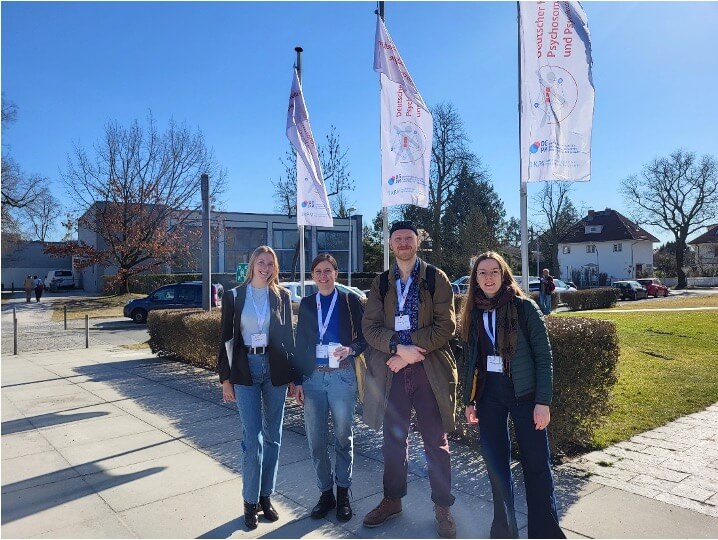
Under the theme Pushing Boundaries — Paths Beyond the Familiar the annual congress of the German College of Psychosomatic Medicine and Medical Psychotherapy (DGPM) took place from March 4th to 6th.
This year, the congress focused on the diverse challenges posed by internal and external boundaries, which become apparent through illness, loss, life crises, migration, therapeutic processes, or in the face of global crises such as climate change.
Against this backdrop, we organized a symposium on the topic of "Climate Crisis and Mental Health." Together with colleagues from the university hospitals of Essen and Heidelberg, as well as the Weizenbaum Institute, the topic was examined from various perspectives. The contributions ranged from the concrete impacts of the climate crisis and the resulting need for implementation in psychosomatic care to questions of climate distress and innovative approaches to communicating natural risks through gamified formats.
Jonatan Matthies presented findings on risk perception and heat protection from a broad population survey conducted in 2025. Dr. Hannah Wallis shared results from a high-frequency longitudinal survey using an Ecological Momentary Assessment design, which was carried out in the summer of 2025. The use of this digital diary method provided evidence that individuals with pre-existing mental health conditions suffer more from heat than those without such conditions. Based on these results and the stimulating discussions, we will continue to focus on the implementation of digital diary studies in the field of heat protection in the future.

