

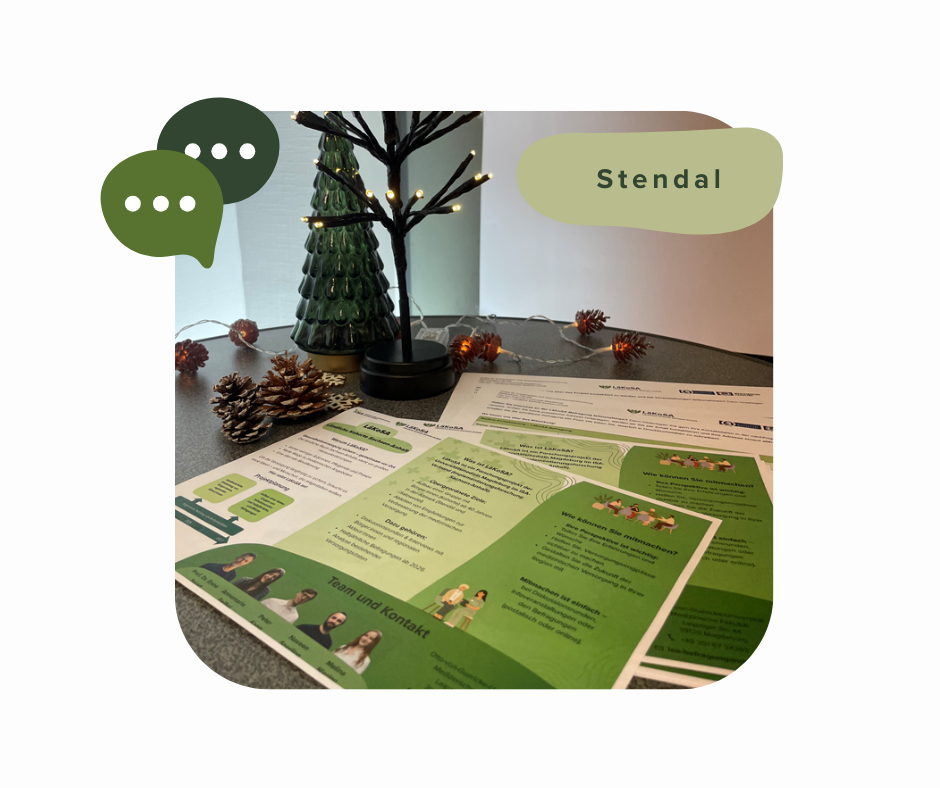
On December 11, 2025, nine citizens gathered at a pop-up store at Breite Straße 18, near the Stendal Christmas market, for a workshop (World Café) to discuss medical care in their region over warm drinks. In small discussion groups, participants shared personal experiences, perceptions of current medical care, and expectations for future services.
The primary care was viewed with mixed feelings: while there were some positive experiences, participants were particularly critical of the lack of time during consultations, limited capacity for new patients, and the advanced age of many general practitioners. The assessment of specialist care was also negative. Key issues raised included long waiting times, difficulty in securing specialist appointments, restricted access for those with statutory health insurance, and a lack of new medical professionals. Mobility in rural areas was another factor. Long travel distances for specialist services, sometimes requiring trips to other districts, are a reality. Furthermore, many participants feel that local public transport is inadequate, often leaving them dependent on the help of relatives. Inpatient care was also viewed with mixed feelings: long waiting times and staff shortages were contrasted with positive experiences, such as being involved in medical decision-making.
Finally, the participants expressed wishes for more home visits, the deployment of community nurses (e.g., "Sister Agnes"), and more flexible medical training requirements to improve future care.
The World Café facilitated a lively exchange and provided a valuable snapshot of public sentiment at the end of the year.
The project team would like to thank all participants for their openness and BIC Altmark for providing the venue.

