

How do citizens feel about digital health solutions? What has been their experience with the use of artificial intelligence (AI) in health-related matters? And what is important to them when it comes to a standardized federal digital medication plan (BMP)?
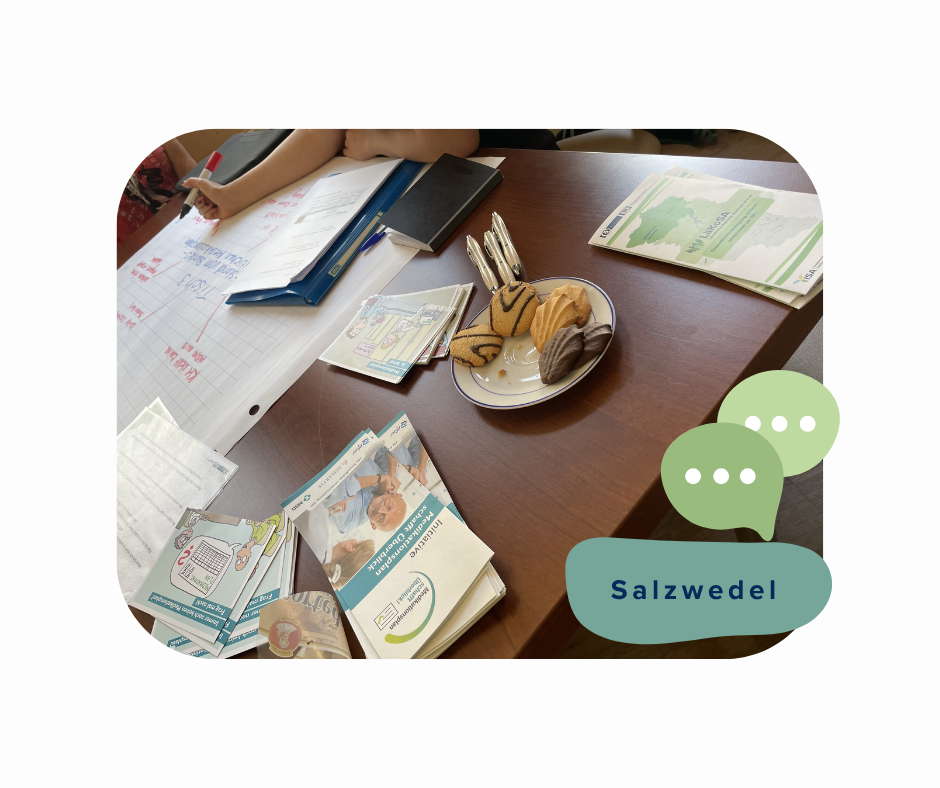
Under the theme "The Future of Care," citizens discussed these three questions, among others, at three different moderated roundtables at the Kunsthaus in Salzwedel, providing valuable insights for the project.
Although the turnout that afternoon was modest, the quality of the exchange was all the higher: the participants were actively engaged and provided honest, nuanced insights into their experiences and expectations.
The first roundtable focused on telemedicine, digital health applications (DiGA), the electronic patient record, and e-prescriptions. Overall, the citizens were positive and open-minded toward digital solutions. One participant highlighted the "Telemedical Ophthalmology Unit Salzwedel" (TEAS) project as a positive example of a telemedical practice. At the same time, however, there remained some skepticism as to whether the equipment could keep pace with that of a fully equipped, regular ophthalmology practice.
Nevertheless, it became clear that older people need social contact with medical staff and should not be treated exclusively with digital solutions. In general, citizens would like to see more information resources that are also shared by general practitioners.
At the second roundtable, digital solutions were explored in greater depth, with a focus on AI. Although the participants had not yet used AI for health-related topics, it was clear that they believe AI should function as a tool rather than a decision-maker. However, it was also acknowledged that, pragmatically speaking, humans are better than machines in certain areas, such as nursing—though given the staff shortages, a machine is better than nothing. In psychosocial care, the participants painted a rather skeptical picture, preferring personal contact in this area.
At this table, the desire for information on the potential applications of AI became clear.
Going beyond the topic of digitalization, the third table discussed the standardized federal medication plan (BMP). In addition to how they are issued, the discussion covered the practicality and use of the plans, as well as future digital solutions for the BMP. Not all citizens have a BMP. They reported inconsistent templates, the impracticality of the format, and, in some cases, a failure to issue the plan at all. Everyone considers a digital solution, for example in the form of an electronic patient record, to be suitable and practical. Since the BMP is a topic of the ISA project "Emergency and Intensive Care Medicine," it was addressed as a supplementary topic during the World Café.
A big thank you goes to the participating citizens and the Kunsthaus Salzwedel for their kind support of the event.

